

Over the years, I’ve received hundreds of phone calls from child care NGOs asking for support. Most of them start the same way — with a rushed voice on the other end diving straight into a sob story.
There’s barely a moment to breathe, let alone respond. And while I’ve always had the intent to help, these calls rarely led to me making a donation.
Not because I didn’t care.
But because the experience was so emotionally draining and transactional, it pushed me away.
I know I’m not alone in this.
When Noble Intent Meets Broken Execution
I still remember the first few calls I got — they felt genuine. “Mata Rani ki kripa hogi, May lord Krishna bless you, You’re a noble soul, sir” many callers said, after sharing a tragic story about a child’s illness. It was moving. Emotional. It tugged at something inside me.
But then the same tone, the same stories, the same phrases started repeating.
It began to feel rehearsed.
Then monotonous.
And eventually, manipulative.
What could’ve been a conversation between two people wanting to do good turned into a guilt trip.
Over time, I stopped picking up. Even when I wanted to say yes, the caller on the other end wouldn’t pause to listen. The monologue would go on until I had to disconnect — and with it, my willingness to give.
When something as human and noble as charity begins to irritate, you know the approach is broken.
Following is a glimpse of how it look & feel,
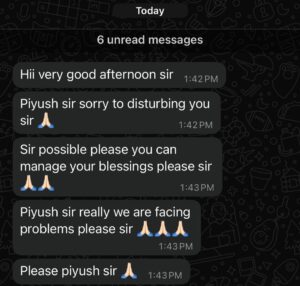
Why This Keeps Happening
Most NGOs in India operate with limited resources. They rely on volunteers or low-budget hires for fundraising, especially over the phone. These callers are often untrained — not just in communication, but in emotional intelligence.
The assumption seems to be that sorrow equals conversion.
That if you make someone feel bad enough, they’ll donate.
But it doesn’t work like that. Not anymore.
People have their own challenges. Starting a call with a 3-minute tragedy story — without even asking how someone is doing — feels intrusive. And when this is the only time you hear from an NGO, it doesn’t feel like a cause anymore. It feels like a transaction.
The irony? These same NGOs want to build trust, but their approach does the opposite.
What the Numbers Say
Telemarketing conversion rates tell the story clearly.
Even on warm leads (people who have donated before), the average call-to-donation ratio is 1 in 5 to 1 in 10. For cold lists, it drops further — only 4–8% convert.
Now compare that with recurring donation programs — the kind that lets people set up AutoPay and receive structured updates. These often retain over 40–60% of donors long-term, with far less cost and emotional fatigue.
In a time where people are already seeking convenience, the way you ask for support matters more than ever.
A Better Way to Ask for Help
Donation is a service. And service is all about experience.
I once signed up for a program called “Give Every Month” by a platform called Impact Guru. They allowed me to set up an AutoPay for monthly ngo donations, and in return, I received:
- Periodic impact reports about how my money was used
- 80G certificate for tax benefits (super helpful during ITR season)
- Personal stories and pictures of the work they were doing
- A sense of being part of something, not just paying for it
I never felt emotionally blackmailed. I felt included. It was peaceful and fulfilling. Exactly how a donation experience should feel.
This is what more NGOs in India need to embrace.
Whether you’re learning how to run a NGO in India or figuring out how to raise money for a charity, the experience you offer donors matters just as much as the cause you’re fighting for.
If You’re an NGO, Here’s What You Can Do
If your organization depends on donations to survive, then your donor is your customer. And customer experience isn’t a luxury — it’s the core of sustainability.
Here’s how to improve:
1. Train your callers
Instead of emotion-heavy scripts, teach them conversation. Let them pause. Let them listen. Create two-way dialogues, not emotional speeches.
Having a real conversation reduces the call-drop rate and increases the chances of actually getting donations.
The same works in every other industry. Have you ever felt irritated with Credit Card / Loan agent calling you?
The same reason.
2. Enable AutoPay
Platforms that offer donation NGO tax exemption and easy recurring payment systems build trust. If you’re unsure about how to receive donations online, partner with platforms like GiveIndia, Milaap, or Impact Guru.
Having AutoPay system provides a donation visibility on a month-on-month basis and is an excellent tool for customer retention.
This works like a set & forget mechanism that makes the donor’s life easy and creates a stickiness.
3. Engage beyond donations
Send monthly updates, success stories, photos, videos — not just receipts. Make people feel good about donating.
Not jus the WhatsApp drop but rather create a weekly/monthly magazine that covers all the aspects of your work as well as recent trends in the charity industry.
This will not only enhance the donor’s experience but they’ll also gain some knowledge out of it.
4. Build relationships
Don’t show up only when you need funds. Wish donors on special occasions. Thank them personally. Make them feel seen.
One thing that really pisses me off is when someone reaches out only when they need something.
The same psychology works in charity industry as well.
5. Think loyalty, not pity
This isn’t about gamifying charity, but acknowledging that people like being part of movements that make a difference. Recognition, even in small ways, goes a long way.
If you’re serious about learning how to get donation for NGO, the answer isn’t just better outreach. It’s better experience.
Closing Thoughts
There are thousands of people out there ready to contribute — but not at the cost of being emotionally drained.
As someone who wants to help, I shouldn’t feel worse after talking to you.
Make me feel better. Make me feel involved. Make me want to do it again.
Because the truth is, I don’t hate giving.
I just hate how I’m being asked to give.
Download “The NGO Experience Playbook – a step-by-step handbook to help NGOs build better outreach, streamline collections, and offer donors a smoother experience.”